Tanzan Shrine
Site of the secret council that reshaped Japan, with the only wooden thirteen-story pagoda.
History and Divine Virtue
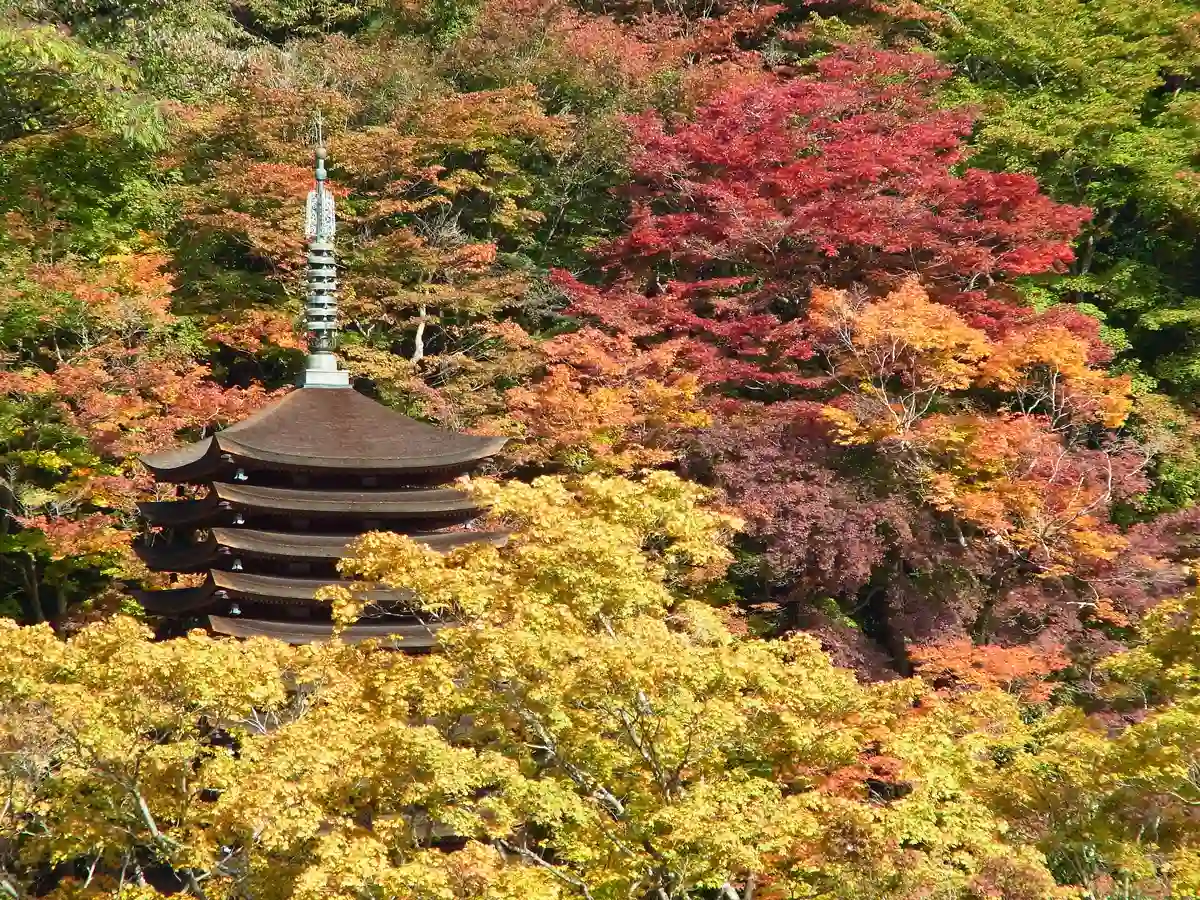
Tanzan Shrine stands deep in the hills of Tonomine in southern Sakurai and enshrines the statesman Fujiwara no Kamatari. Prince Naka no Oe (later Emperor Tenji) and Kamatari are said to have met on this mountain to plan the overthrow of the Soga clan, and the name Tanzan, "mountain of the talk," is traced to that council. After Kamatari's death his eldest son Joe is said to have reburied part of his father's remains here and raised a thirteen-story pagoda, and for centuries the site was the temple Myoraku-ji before becoming a shrine in the Meiji separation of Shinto and Buddhism. The present wooden thirteen-story pagoda, rebuilt in 1532, is regarded as the only surviving wooden pagoda of its kind in the world and is an Important Cultural Property. The vermilion halls and pagoda set against autumn foliage are celebrated, and a kemari ball-game festival is held in spring.
Visiting Notes
- The wooden thirteen-story pagoda rises about seventeen meters and is designated an Important Cultural Property as the only surviving example of its kind.
- The main hall, in richly colored gongen style, is said to have served as a model for the building of Nikko Toshogu.
- At the kemari festivals in April and November, the courtly ball game said to have first brought Kamatari and the prince together is offered to the deity.
- Autumn color peaks from mid to late November, with evening illumination in some years.
A place where a single resolve changed the shape of the nation. Musuhi Techo lists it among shrines of work and contest, a place to steady the heart before a great decision.
Deities and Location
- Enshrined Deities
- Fujiwara no Kamatari
- Location
- 奈良県桜井市多武峰 (Nara)
- Access
- From Kintetsu or JR Sakurai Station, Nara Kotsu bus to Tanzan Jinja, then about a 5-minute walk.
Visiting hours, goshuin (shrine stamps), and festival dates change; please confirm the latest information through each shrine's official announcements. If you find an error in this entry, we would be grateful if you let us know.
Visit Records
Records earn points shared across our sister sites (1 pt ≈ 1 yen in value; points cannot be redeemed for cash or transferred). A fingerprint of the records is inscribed on the blockchain every day, so they cannot be rewritten afterwards.
Shrines to Visit Together
related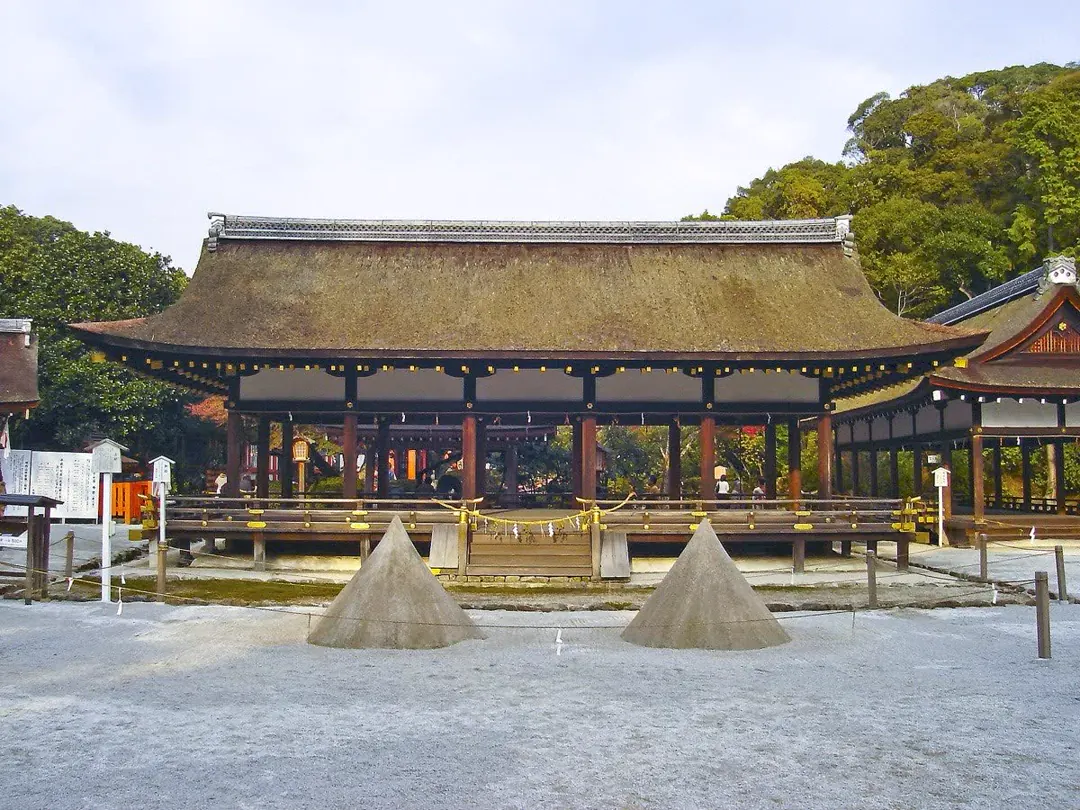 Kyoto
Kamigamo Shrine (Kamo Wake-ikazuchi Jinja)
Ichinomiya of Yamashiro Province, warding off misfortune with the divine power of thunder.
 Nara
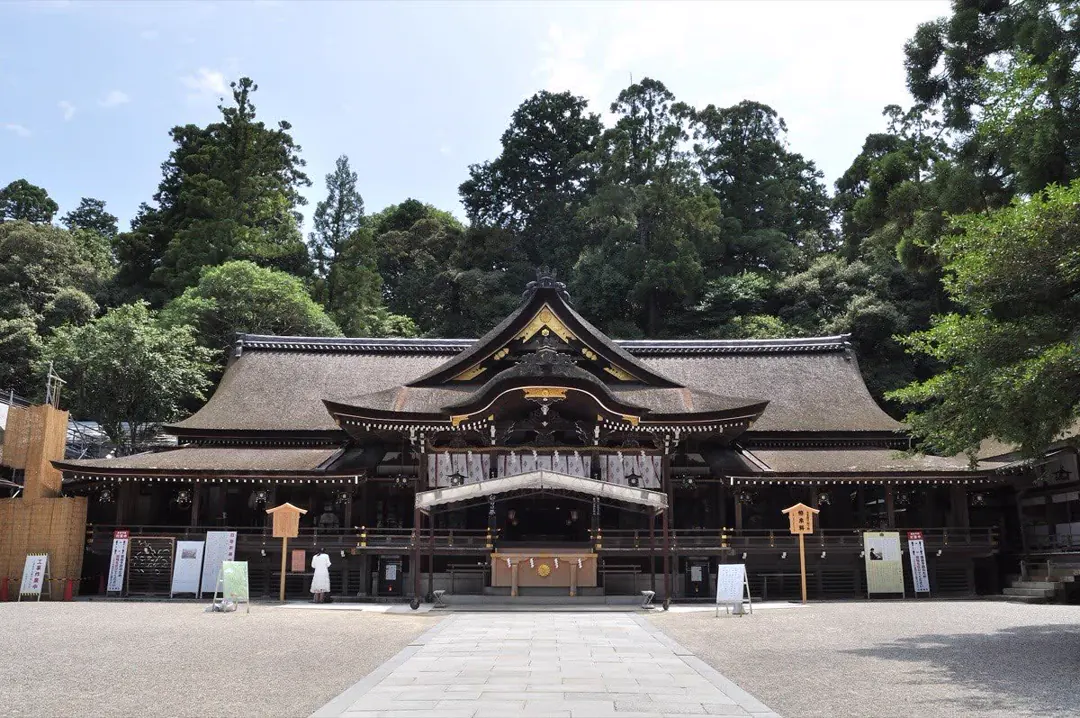
Omiwa Shrine
One of Japan's oldest shrines, whose sacred body is Mount Miwa itself.
 Nara
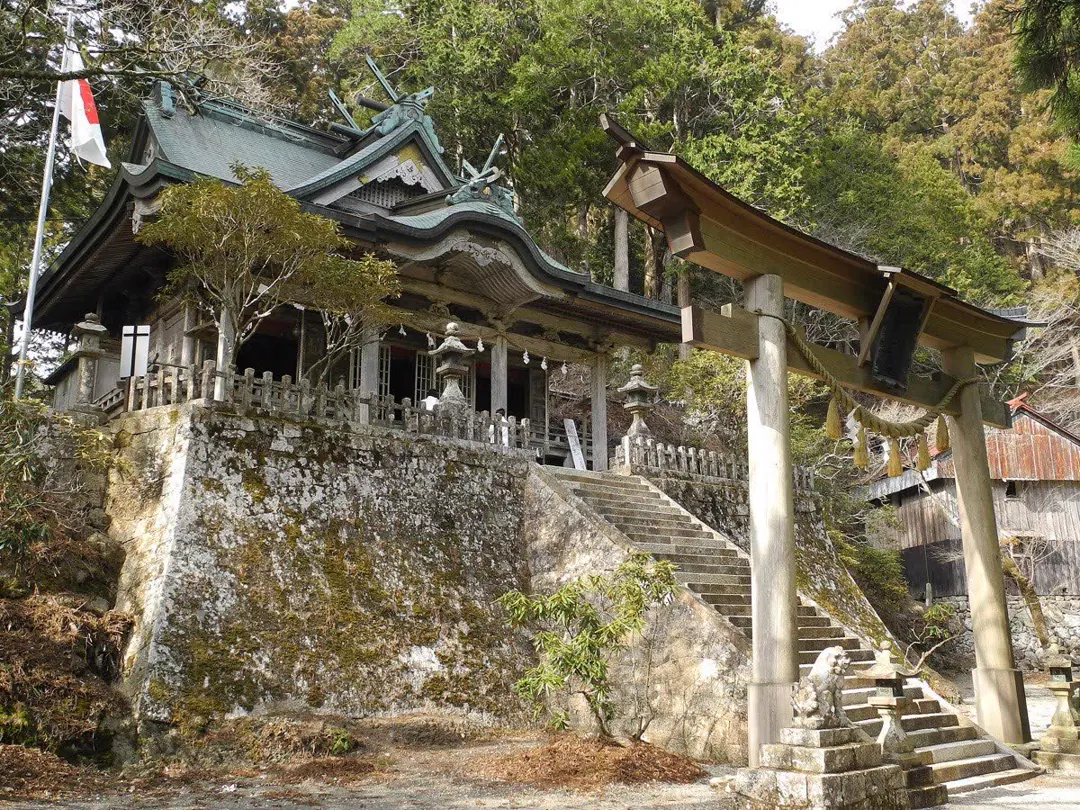
Tamaki Shrine
The inner sanctuary said to be reached only by those who are called.