Kuniumi, the Birth of the Land — Izanagi and Izanami
At the beginning of heaven and earth, the two gods Izanagi no Mikoto and Izanami no Mikoto stirred the sea with the jeweled spear of heaven and descended upon the island of Onogoro. The creation story in which the wedded gods bore the islands of Japan, beginning with Awaji, and a multitude of deities.
When heaven and earth had only just parted, the world was still without form, and the young land drifted like oil floating upon water. After deity upon deity had appeared in Takamanohara, the Plain of High Heaven, there came into being the two gods Izanagi no Mikoto and Izanami no Mikoto. The heavenly deities commanded them, "Complete and solidify this drifting land," and bestowed upon them the jeweled spear of heaven, the Ame-no-Nuboko.
The two stood upon the Floating Bridge of Heaven that joined heaven and earth, lowered the spear, and stirred the sea till it churned and rang. When they drew the spear up, the brine dripping from its point piled and heaped upon itself and became an island — Onogoro-jima, "the island that congealed of itself." The two gods descended upon this island, raised the Pillar of Heaven, and built a spacious palace.
In time the two resolved to be joined as husband and wife. They circled the pillar from left and right, and where they met they exchanged their greetings. Izanami spoke first: "Ana ni yashi, e otoko o — ah, what a fine man!" and Izanagi answered, "Ana ni yashi, e otome o — ah, what a fine maiden!" But perhaps because the goddess had spoken first, the child born to them was Hiruko, the leech-child, born without bones. They set him adrift in a boat of reeds, and the next-born, Awashima, they likewise did not count among their children. When they sought counsel of the gods of Takamanohara, the futomani divination declared that it was ill that the woman had spoken first, and the two circled the pillar once more.
This time Izanagi spoke first, and the birth of the land was splendidly accomplished. The Kojiki tells that the first island born was Awaji-no-Honosawake-no-Shima, the island of Awaji. There followed Iyo-no-Futana-no-Shima (Shikoku), Oki, Tsukushi-no-Shima (Kyushu), Iki, Tsushima, Sado, and Ōyamato-Toyoakitsushima (Honshu); together they were called Ōyashimaguni, the Land of the Eight Great Islands. The two gods then bore six more islands, among them Kojima in Kibi and Shōdoshima. Thus was the land of Japan born of the loving union of the wedded gods.
Their islands born, the two went on to bear the gods: deities of the household, the sea god Ōwatatsumi no Kami, gods of wind, of trees, the mountain god Ōyamatsumi no Kami, gods of the plains. One after another the beings that shape the world came into existence — thirty-five deities in all, the Kojiki counts. The life of a rich land was beginning. But when at the last she bore the fire god Kagutsuchi no Kami, Izanami was burned, took to her sickbed, and at length departed, never to return. From here the story of creation passes into a story of deep parting.
Mitsumine Jinja in Chichibu enshrines as its principal deities Izanagi and Izanami, the wedded gods of the birth of the land. It is said to have begun when Yamato Takeru no Mikoto, on his eastern campaign, enshrined the two gods upon the mountaintop in their memory, and the faith of marital harmony and en-musubi (the binding of bonds) lives there still. The myth of island-bearing echoes too at Enoshima Jinja on the island of Enoshima, said to have risen from the sea, and at Mishima Taisha, linked to the island-creation legends of the isles of Izu.
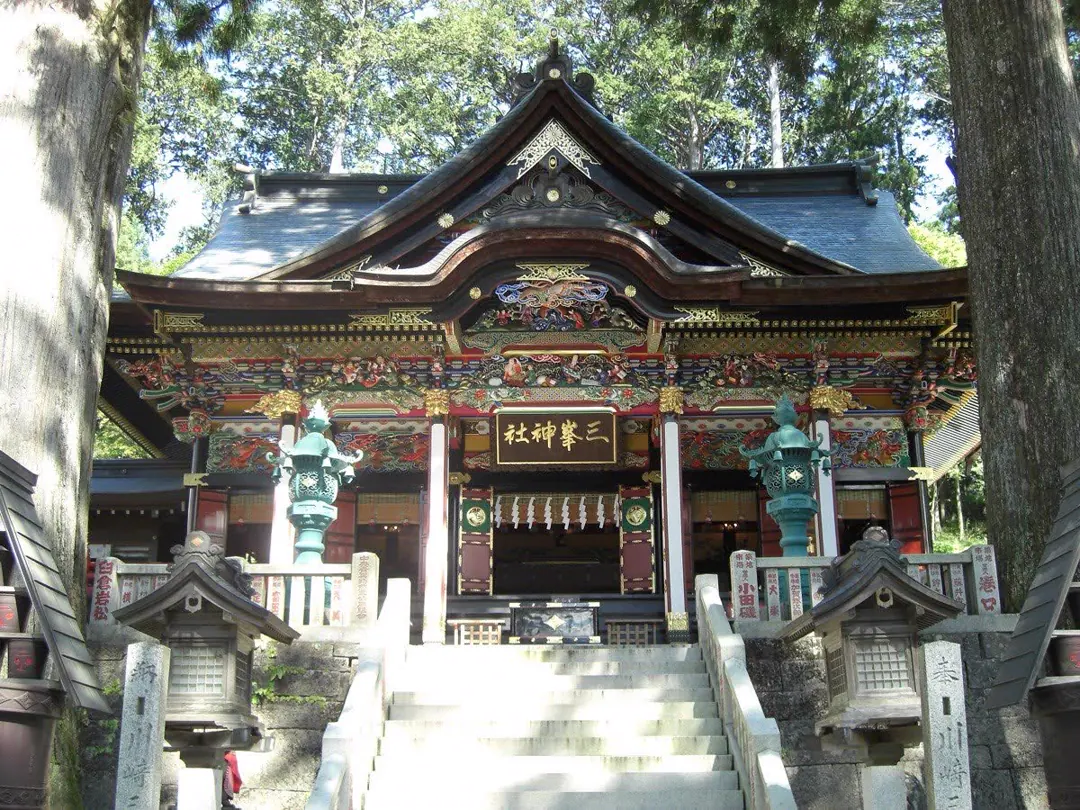 Saitama
Mitsumine Shrine
A sacred precinct some 1,100 meters up, guarded by the wolf messengers called o-inu-sama.
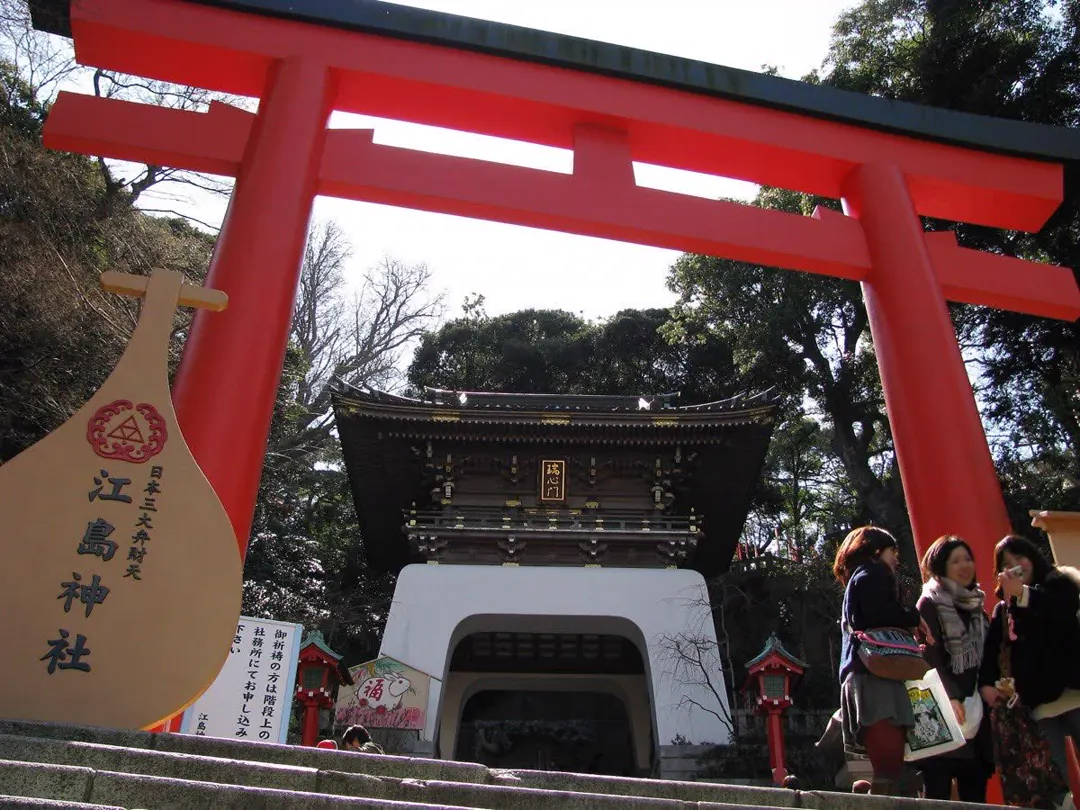 Kanagawa
Enoshima Shrine
An island of three sanctuaries enshrining the Munakata goddesses — one of Japan's three great Benzaiten.
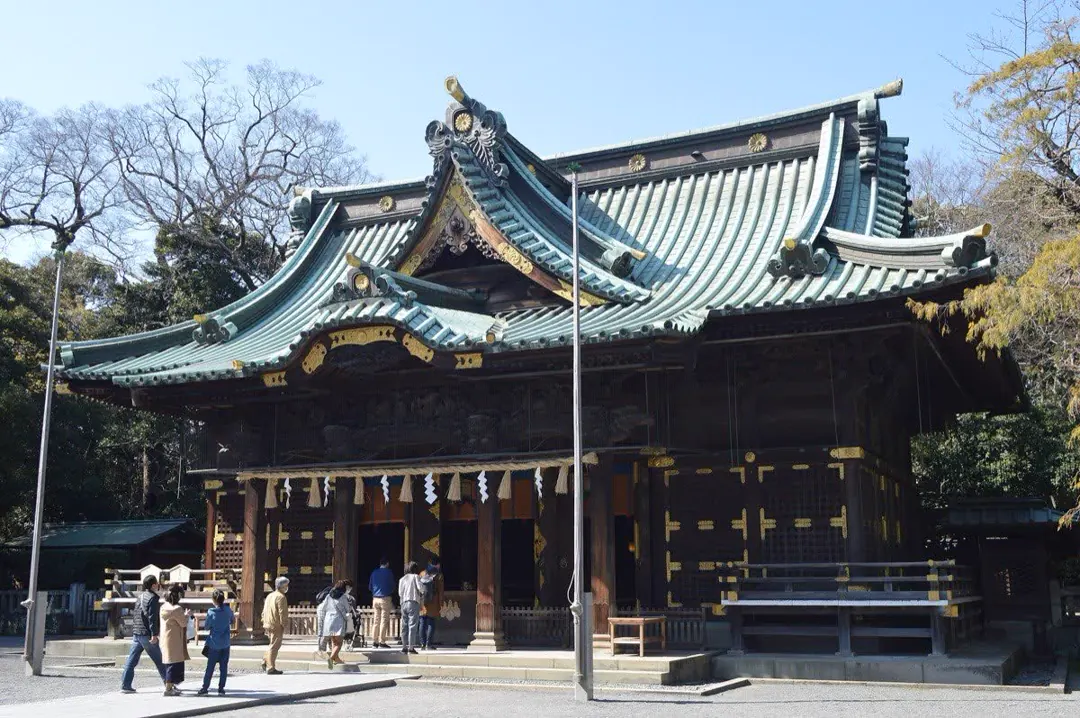 Shizuoka
Mishima Taisha
First shrine of Izu Province, revered by Minamoto no Yoritomo and guardian of commerce.