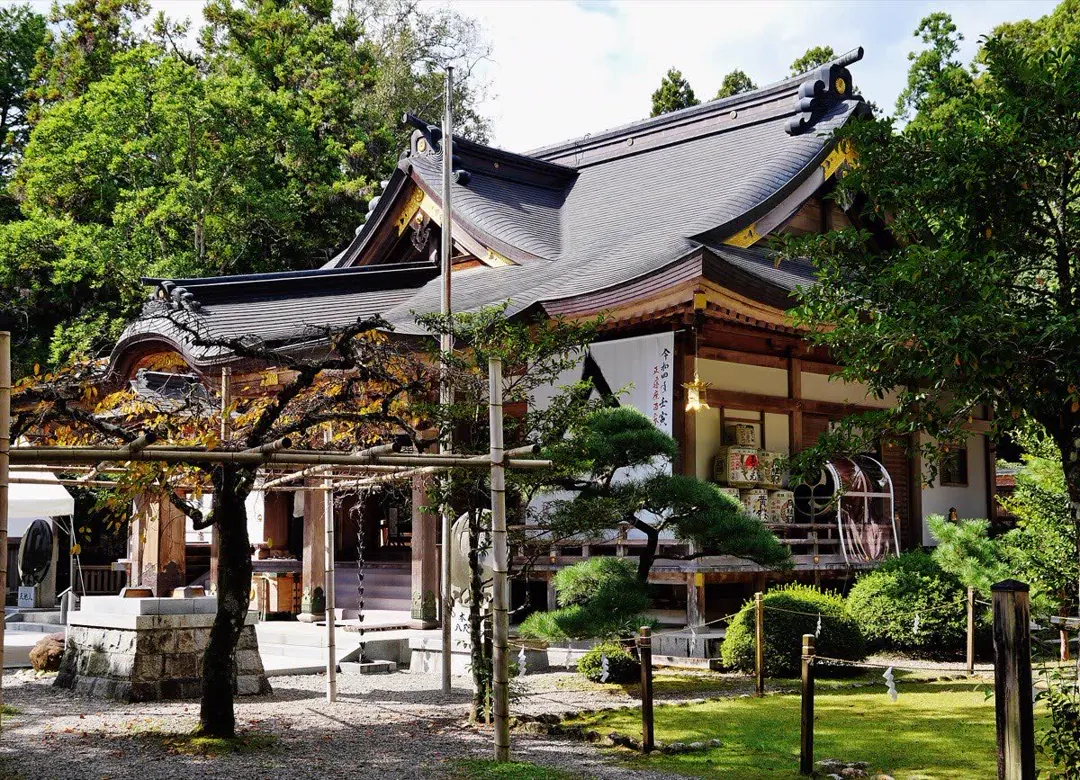
Kumano Hongu Taisha
Sacred ground of rebirth — the heart of the three grand shrines of Kumano.
History and Divine Virtue
The heart of the three grand shrines of Kumano, and head shrine of the thousands of Kumano shrines across Japan. Its principal deity, Ketsumimiko no Okami, is identified with Susanoo no Mikoto. In the Heian period, Kumano was revered as a "sacred ground of rebirth" that received all people regardless of rank or purity, and the processions of retired emperors and commoners alike were likened to "a trail of ants on the Kumano pilgrimage." The shrine originally stood at Oyunohara, a sandbank in the Kumano River, but after the great flood of 1889 part of its halls was moved to the present site. At the former precinct of Oyunohara now stands Japan's tallest torii gate, some 34 meters high. The three-legged crow Yatagarasu, said to have guided Emperor Jinmu, is known as the divine messenger of Kumano, and the precincts form part of the World Heritage Site "Sacred Sites and Pilgrimage Routes in the Kii Mountain Range." The cypress-bark-roofed halls stand encircled by cedar groves, keeping a stillness befitting the center of the Kumano faith.
Visiting Notes
- Climb the 158 stone steps to the cypress-bark-roofed halls; after worship, walk on to the former precinct of Oyunohara.
- The great torii at Oyunohara stands about 34 meters tall — rising from the rice fields, it is the emblematic sight of Hongu.
- You can post a letter from the black Yatagarasu postbox within the grounds.
- Walking the roughly seven kilometers of the Kumano Kodo from Hosshinmon-oji to the shrine is a popular way to arrive.
A shrine that carries the faith of yomigaeri — rebirth. It is often named as a destination for the turning points when one must pause and begin again: an inauspicious year, or the rebuilding after a season of stagnation.
Deities and Location
- Enshrined Deities
- Ketsumimiko no Ōkami
- Location
- 和歌山県田辺市本宮町本宮 (Wakayama)
- Access
- From Shingu Station or Kii-Tanabe Station (JR), take the bus to the Hongu-Taisha-mae stop
Visiting hours, goshuin (shrine stamps), and festival dates change; please confirm the latest information through each shrine's official announcements. If you find an error in this entry, we would be grateful if you let us know.
Visit Records
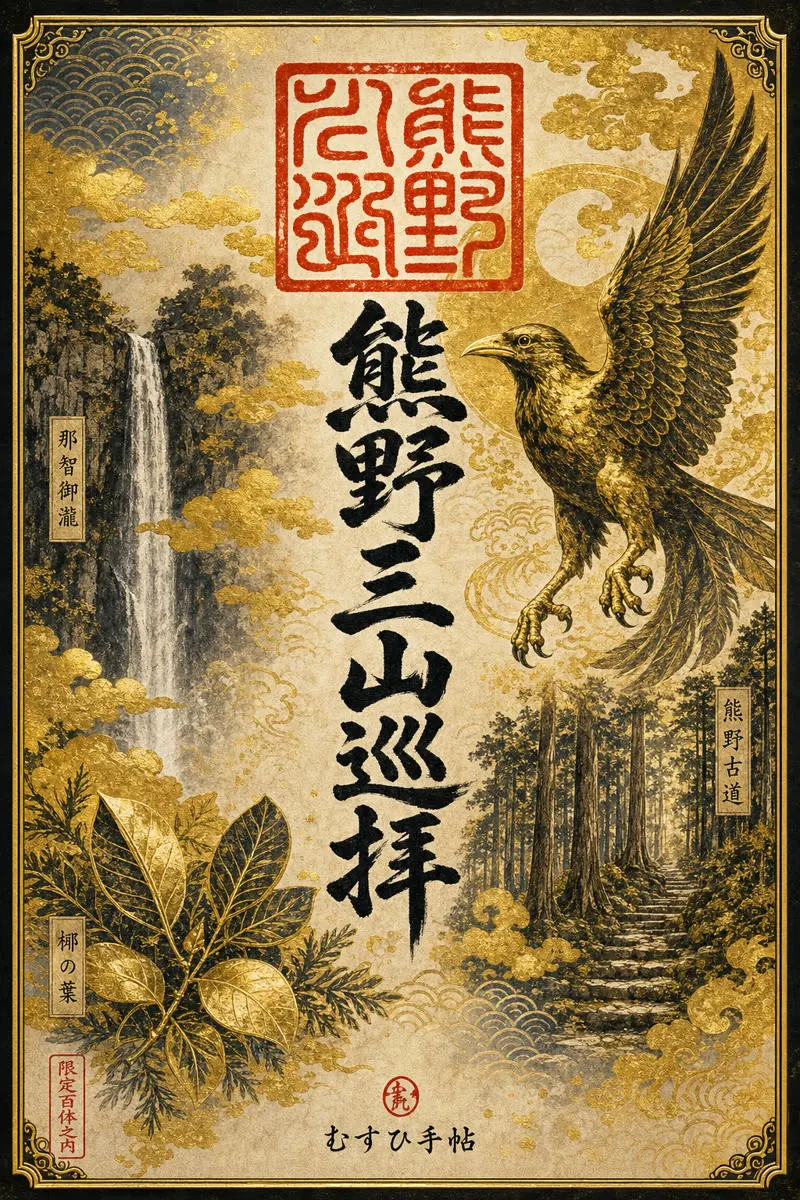 This shrine is part of the “Kumano Sanzan — The Three Grand Shrines of Kumano” pilgrimageRecord a visit to all three shrines to receive a digital goshuin NFT, limited to 100.About the pilgrimage goshuin →
Records earn points shared across our sister sites (1 pt ≈ 1 yen in value; points cannot be redeemed for cash or transferred). A fingerprint of the records is inscribed on the blockchain every day, so they cannot be rewritten afterwards.
Shrines to Visit Together
related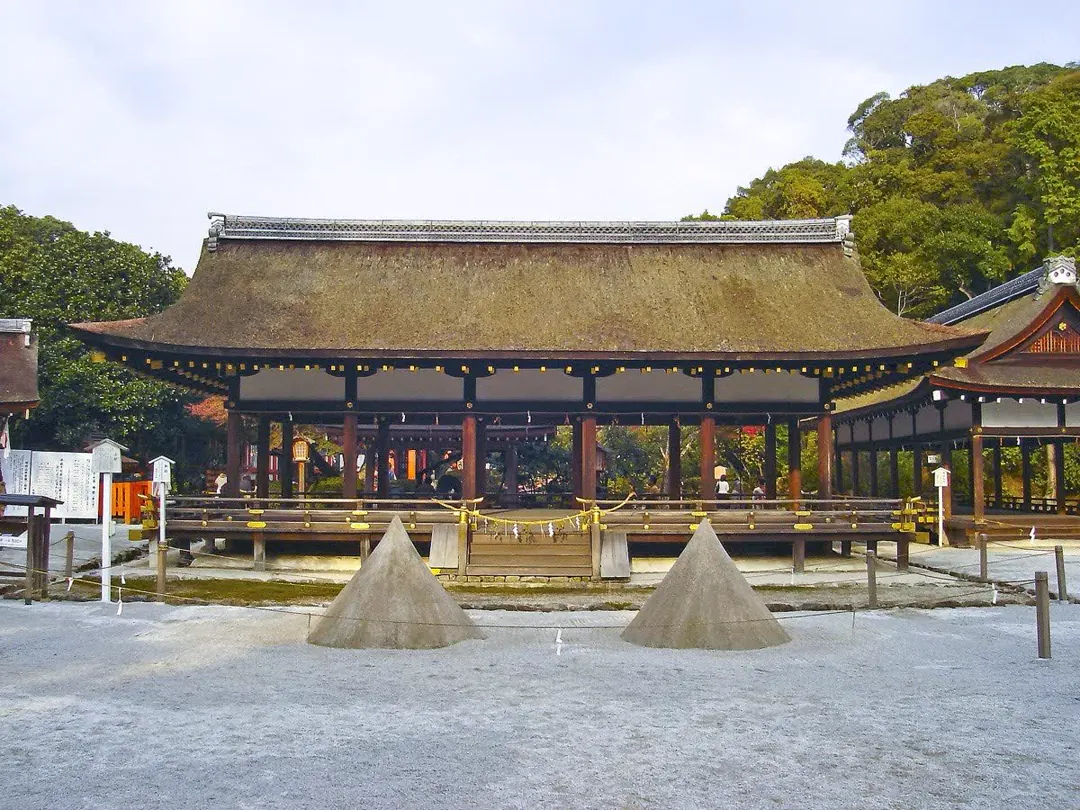 Kyoto
KyotoKamigamo Shrine (Kamo Wake-ikazuchi Jinja)
Ichinomiya of Yamashiro Province, warding off misfortune with the divine power of thunder.
 Kyoto
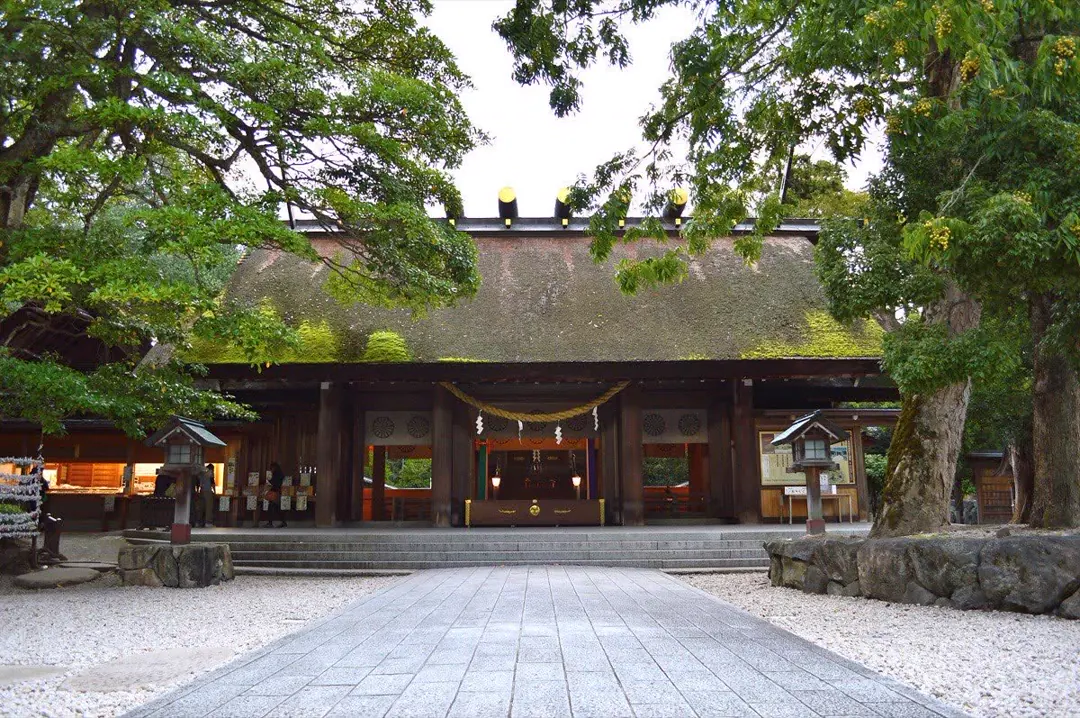
KyotoKono Shrine
Moto-Ise: where the gods dwelt before moving to Ise.
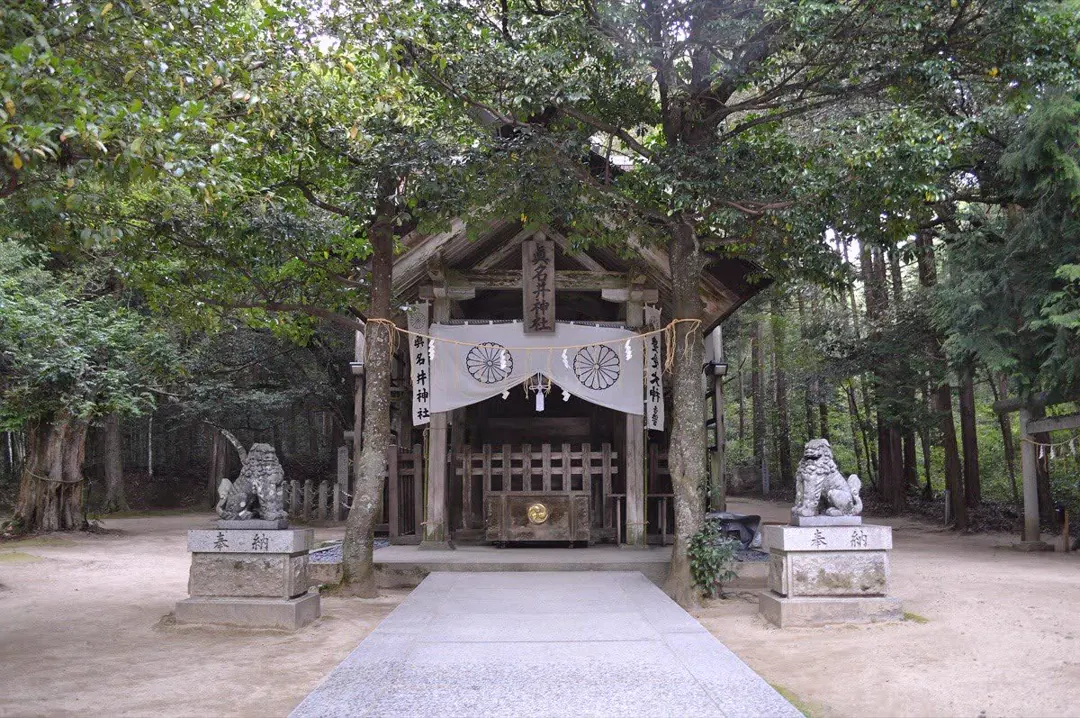 Kyoto
KyotoManai Shrine
Inner shrine of Kono Shrine, where sacred rocks carry prayers from the earliest age.