Tenson Kōrin, the Heavenly Descent — Sarutahiko, Who Opened the Way
Ninigi no Mikoto, grandchild of Amaterasu Ōmikami, descends upon Takachiho bearing the Three Sacred Regalia. Waiting for the company at the eightfold crossroads of heaven was the earthly god Sarutahiko Ōkami. The story of the god of michihiraki, the opening of the way, who named himself boldly and served as guide.
The ceding of the land accomplished, Ashihara-no-Nakatsukuni became a land to be ruled by the august child of the heavenly gods. Amaterasu Ōmikami commanded her grandson Ninigi no Mikoto, "This Land of Abundant Reed Plains and Fresh Rice Ears is the land you shall rule. Flourish together with heaven and earth," and bestowed upon him the Three Sacred Regalia: the mirror Yata-no-Kagami, the curved jewels Yasakani-no-Magatama, and the sword Kusanagi-no-Tsurugi. Of the mirror she is said to have told him, "Regard this as my very spirit, and worship it as you would worship me."
Directing this descent together with Amaterasu Ōmikami was, as in the ceding of the land, Takagi no Kami — Takamimusuhi no Kami, one of the Three Deities of Creation. The Kojiki tells the heavenly descent throughout as "the command of Amaterasu Ōmikami and Takagi no Kami," and in the main text of the Nihon Shoki it is Takamimusuhi no Mikoto alone who commands the descent. The god of musuhi who had hidden himself at the beginning of heaven and earth stood, in truth, upon the story's front stage as the effective commander of the heavenly grandchild's journey.
When Ninigi was about to descend, there stood at Ame-no-Yachimata — the parting of the ways that joins heaven and earth — a god of strange countenance, whose light shone upward upon Takamanohara and downward upon Ashihara-no-Nakatsukuni. As the gods hung back in fear, Amaterasu Ōmikami and Takagi no Kami summoned Ame-no-Uzume no Mikoto: "You are a frail goddess, yet one who does not flinch when face to face. Go and ask who it is that stands upon this road." She was that same goddess who had danced before the heavenly rock cave and opened the way for the breaking of the darkness.
When Ame-no-Uzume stepped boldly forward and asked, the god named himself with full dignity: "I am a god of the land, Sarutahiko Ōkami. Hearing that the august child of the heavenly gods descends, I have come out to meet him, that I may serve as guide upon the way." The strange figure feared as a demon barring the road had been waiting there to open it.
Led by Sarutahiko Ōkami, and attended by the five clan-heads of heaven (itsu tomo no o) — Ame-no-Koyane no Mikoto, Ame-no-Futodama no Mikoto and the others — Ninigi left the heavenly rock-seat, pressed apart the eightfold trailing clouds, and descended upon the peak of Takachiho in Himuka of Tsukushi. "This land faces Karakuni; it is a land the morning sun strikes straight, a land the evening sun illumines. A most excellent land," he proclaimed in blessing, and raised a splendid palace with pillars set deep upon the bedrock and chigi crossbeams reaching to Takamanohara. It is the scene handed down as the origin of the imperial house — the descendants of the heavenly gods come to rule the earth. Ame-no-Futodama, who attended the descent, was that same Futodama no Mikoto who had stretched the shimenawa rope before the rock cave; his descendants, leading the Inbe clan of Awa, are said to have opened the land of Bōsō and enshrined their ancestral god there — the beginning of Awa Jinja.
His duty done, Sarutahiko Ōkami returned to his home by the river Isuzu in Ise. By the command of Amaterasu Ōmikami it was Ame-no-Uzume no Mikoto who escorted him there, and, taking on Sarutahiko's name, she came to be called Sarume-no-Kimi, the Kojiki tells; one tradition holds that the two became husband and wife. Before the descent, moreover, Amaterasu is said to have sent the three Munakata goddesses down to the roads of Tsukushi, commanding, "Aid the sovereigns of every generation, and receive their worship," and the three goddesses were revered as Michinushi-no-Muchi, the sovereign of the ways. The story of the gods who opened the roads of heaven and earth lives on today in the faith of journeys and of guidance.
Kirishima Jingū enshrines Ninigi no Mikoto in the land of the descent legend, looking up to the peak of Takachiho. Tsubaki Ōkamiyashiro and Sarutahiko Jinja enshrine Sarutahiko Ōkami of michihiraki, the opening of the way, and Munakata Taisha enshrines the three goddesses revered as Michinushi-no-Muchi. Awa Jinja enshrines Ame-no-Futodama no Mikoto, who attended the descent, and at Heitate Jingū remains the tradition that sacred staves were planted there at the time of the descent.
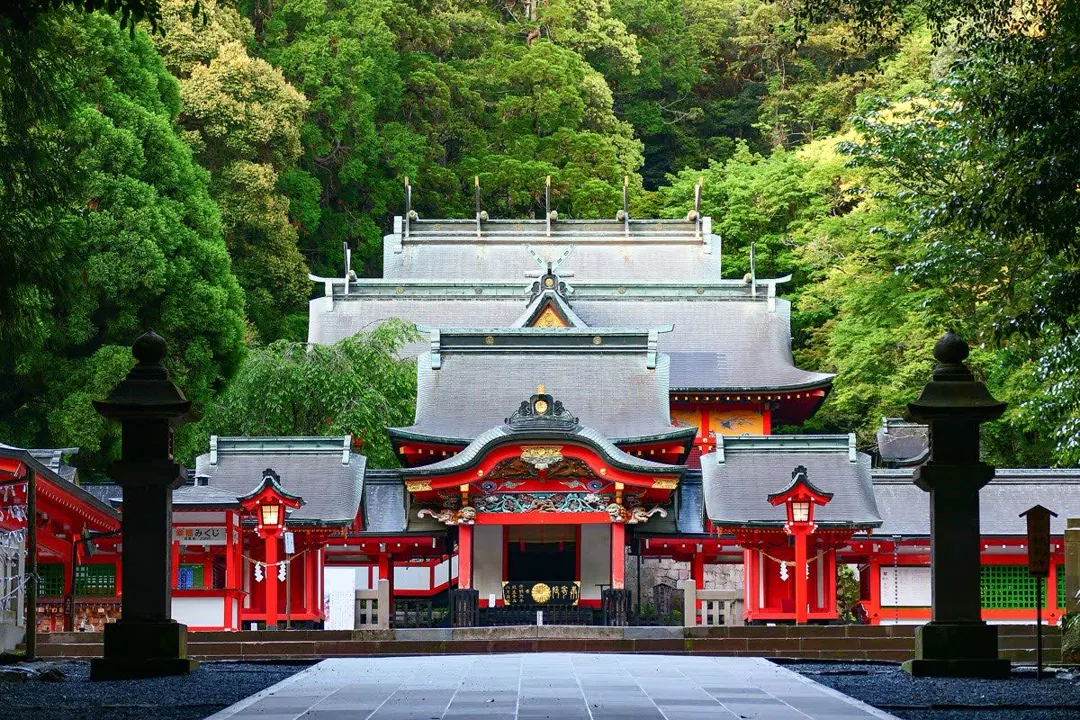 Kagoshima
Kirishima Jingu
A National Treasure shrine beneath the peak of the heavenly descent.
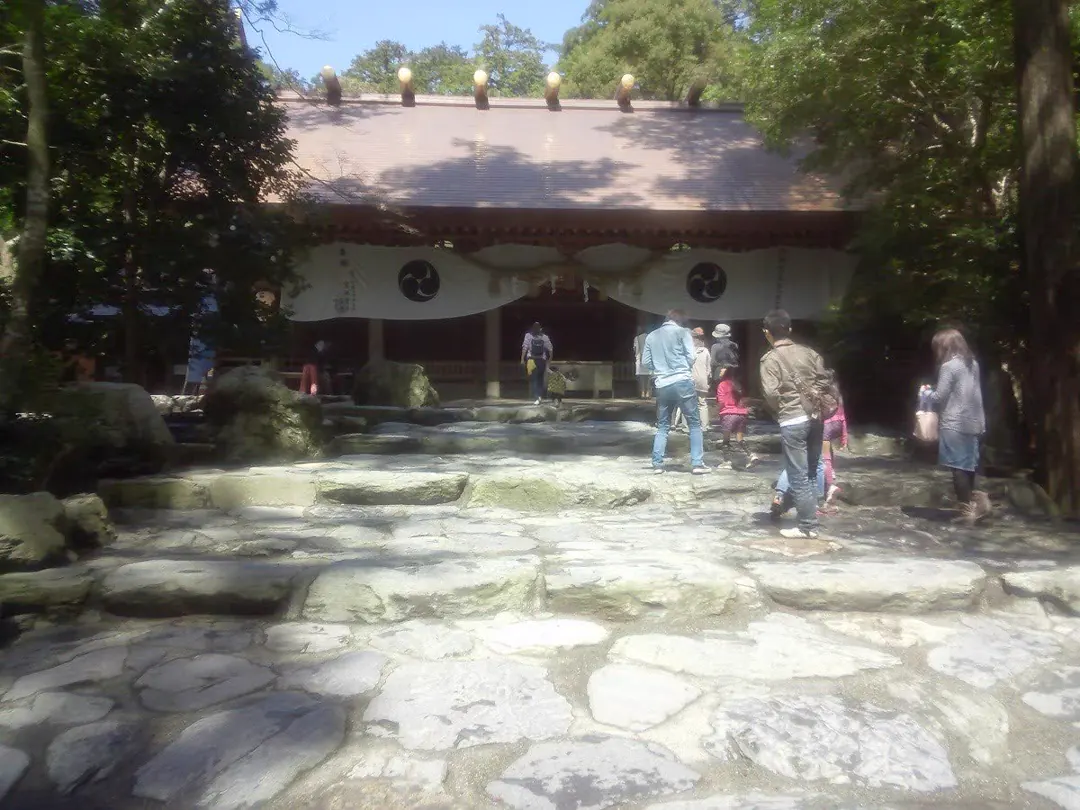 Mie
MieTsubaki Grand Shrine (Tsubaki Okamiyashiro)
Head shrine of Sarutahiko no Okami, the deity who opens the way.
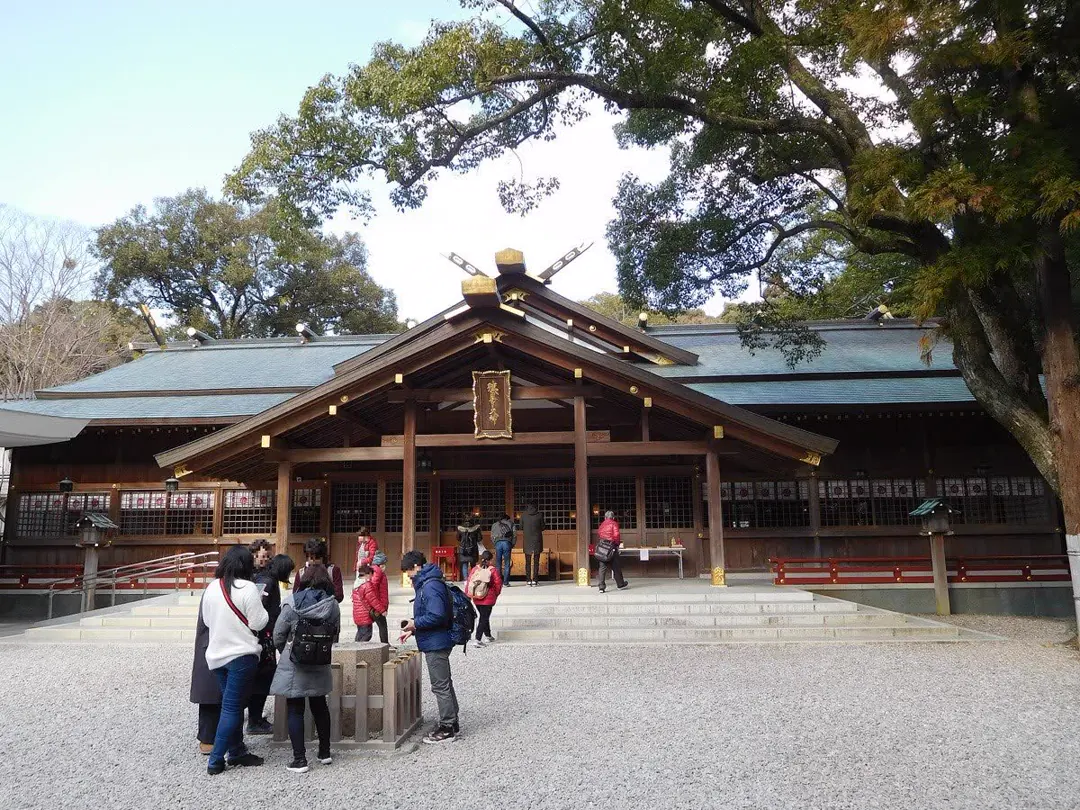 Mie
MieSarutahiko Shrine
A shrine of way-opening, where the eight-sided direction stone rests.
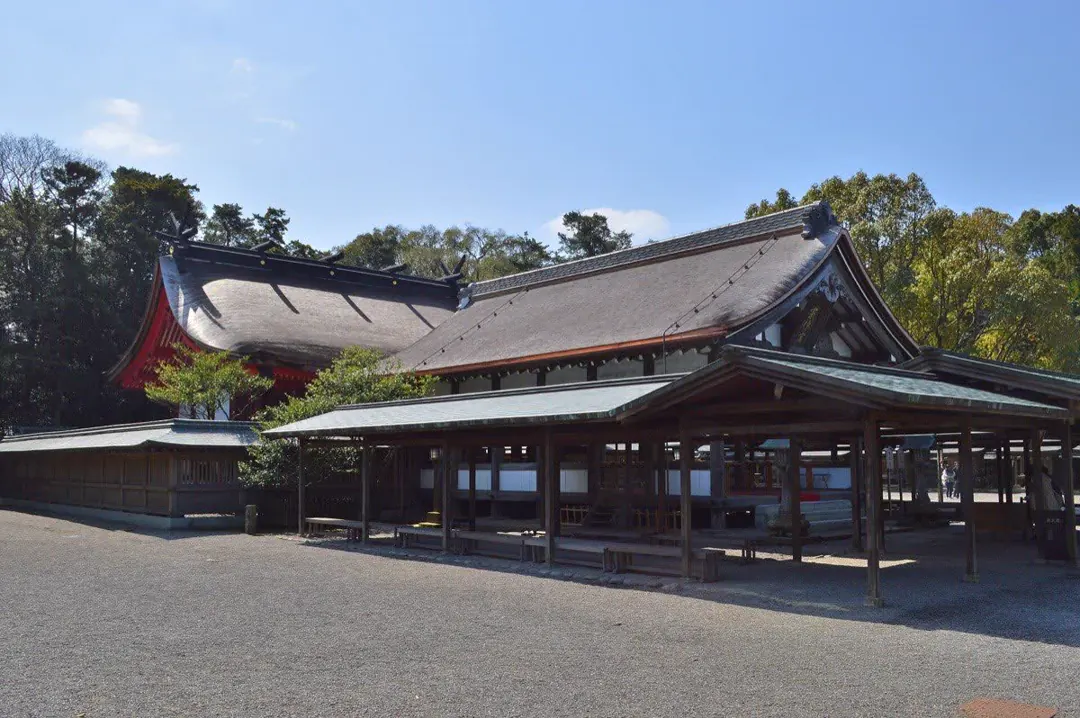 Fukuoka
Munakata Taisha
Three sanctuaries of Michinushi no Muchi, the deity who guides every path.
 Chiba
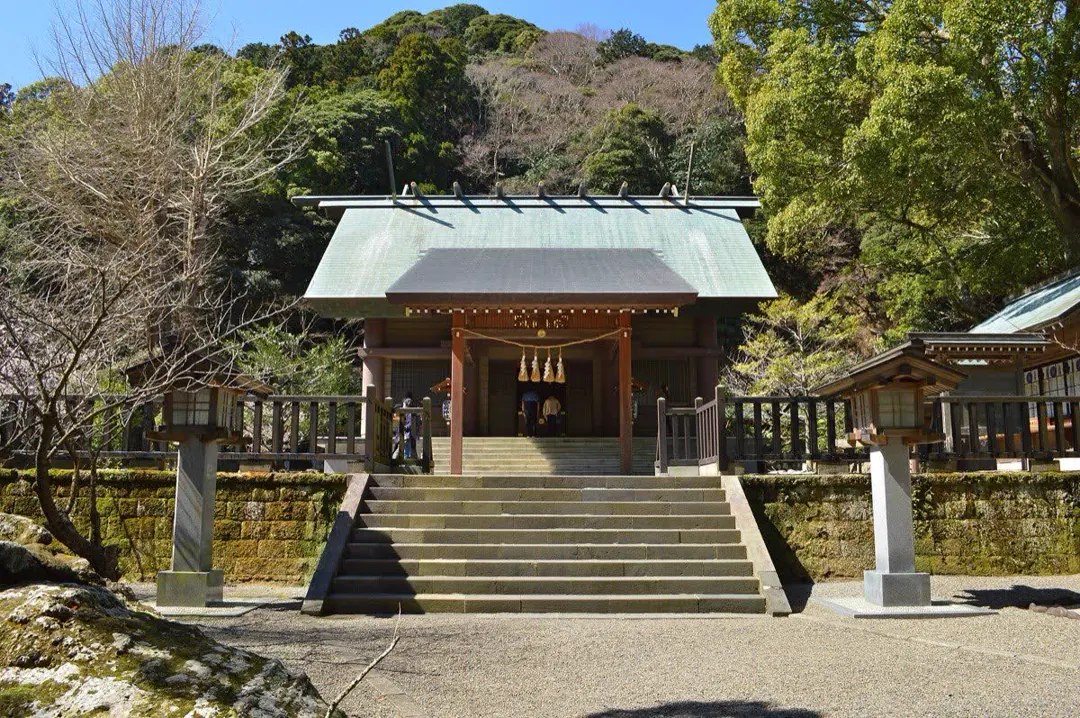
ChibaAwa Shrine
First shrine of old Awa Province, enshrining Ame-no-Futodama, ancestral deity of all industry.
 Kumamoto
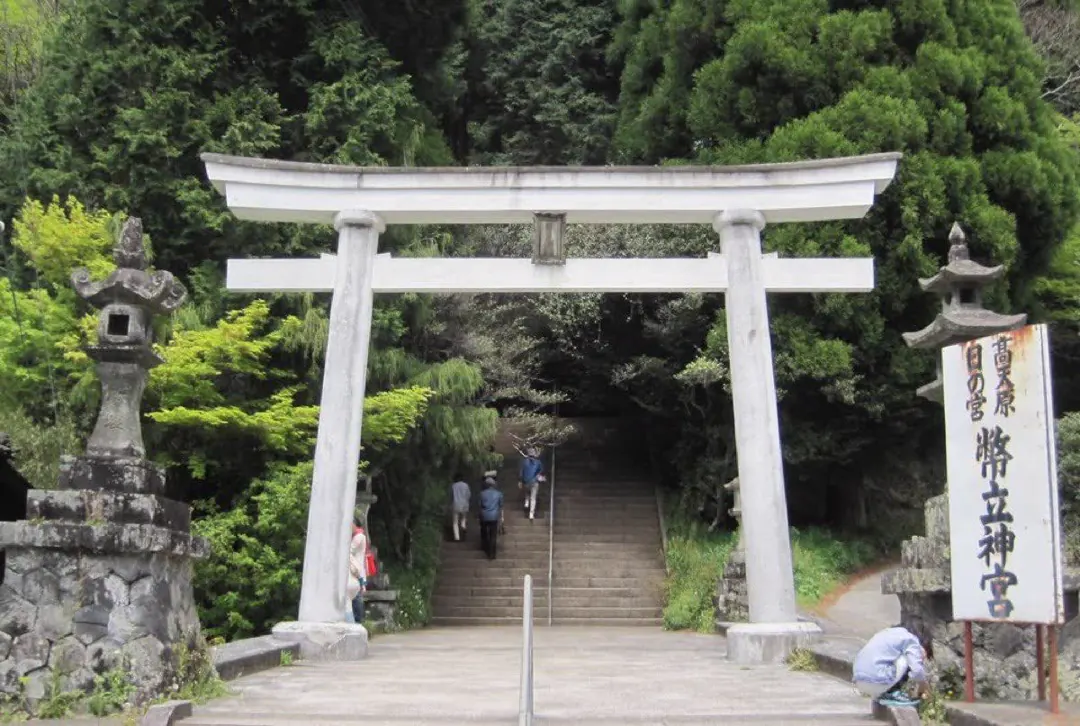
Heitate Jingu
A hidden sanctuary of Kyushu, keeper of the Takamagahara legend.