Kuniyuzuri, the Ceding of the Land — Takemikazuchi and Kotoshironushi
That the heavenly grandchild might rule Ashihara-no-Nakatsukuni, Amaterasu Ōmikami sends the war god Takemikazuchi-no-O no Kami to Izumo. Through the consent of Kotoshironushi no Kami and the trial of strength with Takeminakata no Kami, Ōkuninushi no Kami yields the land in exchange for the building of a grand palace.
Through the land-making of Ōkuninushi no Kami, Ashihara-no-Nakatsukuni, the Central Land of Reed Plains, flourished in abundance. Amaterasu Ōmikami in Takamanohara declared, "That land is a land my descendants should rule," and resolved to send an envoy. But the first envoy, Ame-no-Hohi no Kami, gave his heart to Ōkuninushi and for three years made no report; and the next, Ame-no-Wakahiko, took Ōkuninushi's daughter to wife, passed eight years, and never returned at all.
Guiding this plan for the ceding of the land, together with Amaterasu Ōmikami, was Takagi no Kami — Takamimusuhi no Kami, one of the Three Deities of Creation who had appeared at the beginning of heaven and earth. In the Kojiki, the choosing of envoys and the rulings of the councils alike are spoken "by the command of Amaterasu Ōmikami and Takagi no Kami," and Takamimusuhi is depicted moving as the directing power of Takamanohara. It was Takagi no Kami, too, who sent the pheasant Nakime to test the heart of Ame-no-Wakahiko, and who hurled back the arrow that had pierced her and flown up to heaven, striking Ame-no-Wakahiko down.
At the council's end, the god sent was the war god Takemikazuchi-no-O no Kami — accompanied, the Nihon Shoki records, by Futsunushi no Kami. Alighting on the little shore of Izasa in Izumo, the beach of Inasa, Takemikazuchi drew his ten-span sword (totsuka no tsurugi), thrust it point upward upon the waves, and sat cross-legged upon its tip. "It is declared that this land is a land the august child of Amaterasu Ōmikami should rule. What is your heart in this?"
Ōkuninushi answered, "It is not for me to say. My son, Kotoshironushi no Kami, shall answer." Kotoshironushi, who was fishing off the cape of Miho, replied to the messenger's question: "With reverence. Let this land be offered up to the august child of the heavenly gods." Then he tilted his boat beneath his feet, clapped the reversed heavenly clap (ame no sakate), turned the boat into a fence of green brushwood (aofushigaki), and hid himself within it.
But the other son, Takeminakata no Kami, proud of his strength, would not consent. Lifting lightly upon his fingertips a boulder that a thousand men could barely move, he cried, "Who is it that comes to our land and speaks in whispers? Come then, let us try our strength," and seized the arm of Takemikazuchi. At once that arm turned into a pillar of ice, and then into a sword's blade. When Takeminakata drew back in fear, Takemikazuchi in his turn seized his arm, crushed it like a young reed, and hurled him away. Takeminakata fled as far as Lake Suwa in Shinano and swore: "From this place I will go to no other. Ashihara-no-Nakatsukuni shall be offered up to the august child."
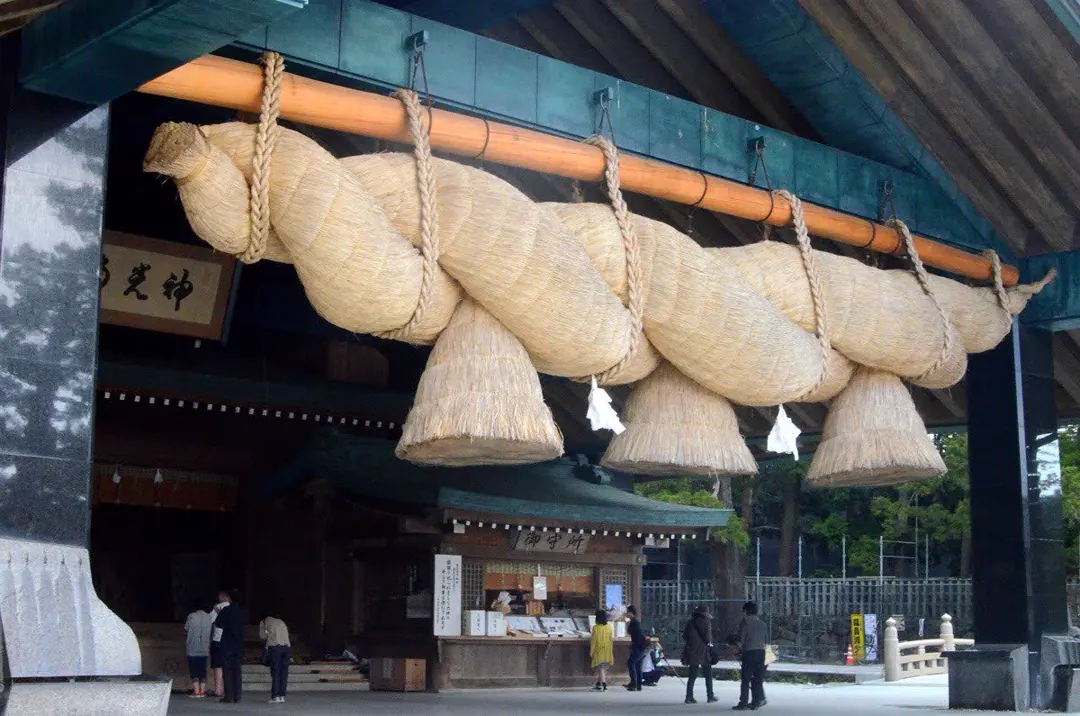
Receiving the words of his two sons, Ōkuninushi consented to yield the land — adding but a single wish: "For my dwelling, raise for me, even as the august child of the heavenly gods dwells, a grand palace with pillars set deep upon the bedrock below and crossbeams (chigi) reaching up to Takamanohara." So a splendid palace was built upon the beach of Tagishi in Izumo. This is held to be the origin of Izumo Taisha. Accomplishing the union of the land with battle held to the least, by covenant and by worship, the kuniyuzuri — the ceding of the land — leaves a resonance uncommonly deep even among the myths of Japan.
Kashima Jingū enshrines Takemikazuchi-no-O no Kami and Katori Jingū enshrines Futsunushi no Kami; together with Ikisu Jinja they are called the three great shrines of the eastern lands linked to the ceding of the land. Suwa Taisha stands in the place where Takeminakata no Kami came to rest, and Izumo Taisha is the palace of Ōkuninushi no Ōkami whose building was promised in this story.
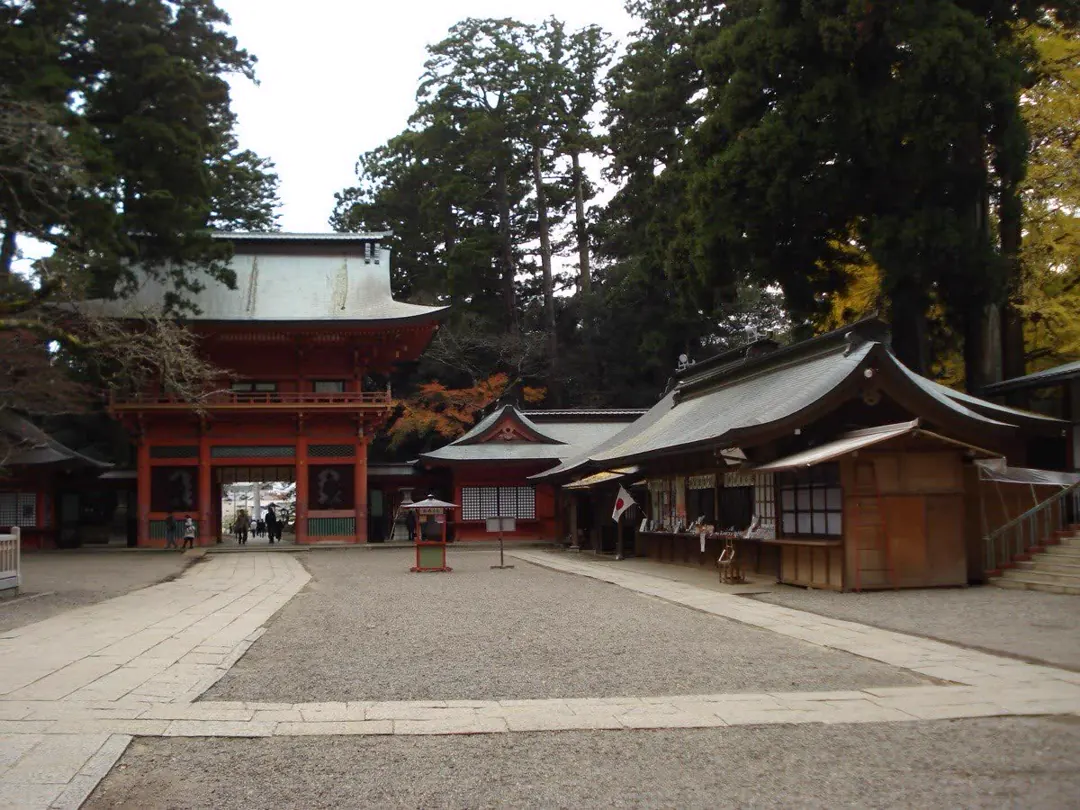 Ibaraki
Kashima Jingu
First shrine of old Hitachi Province, enshrining Takemikazuchi — the shrine of "kashima-dachi," the setting forth on a journey.
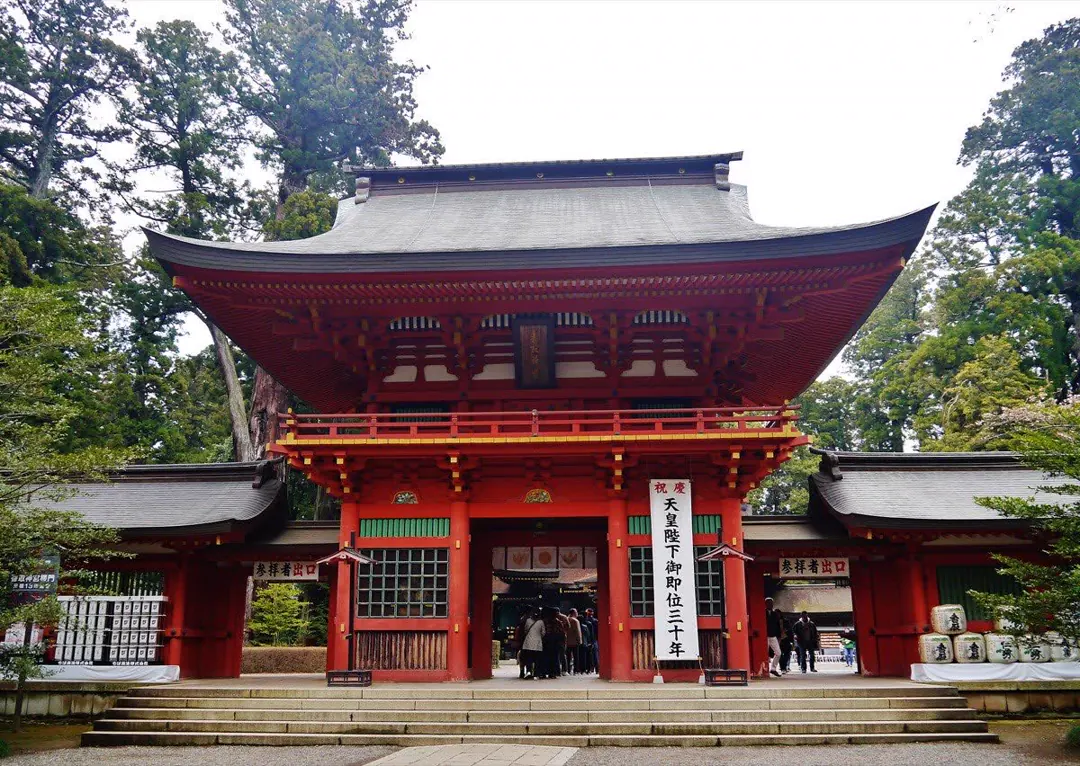 Chiba
ChibaKatori Jingu
First shrine of old Shimosa Province, enshrining Futsunushi no Okami — one of the Three Shrines of the East.
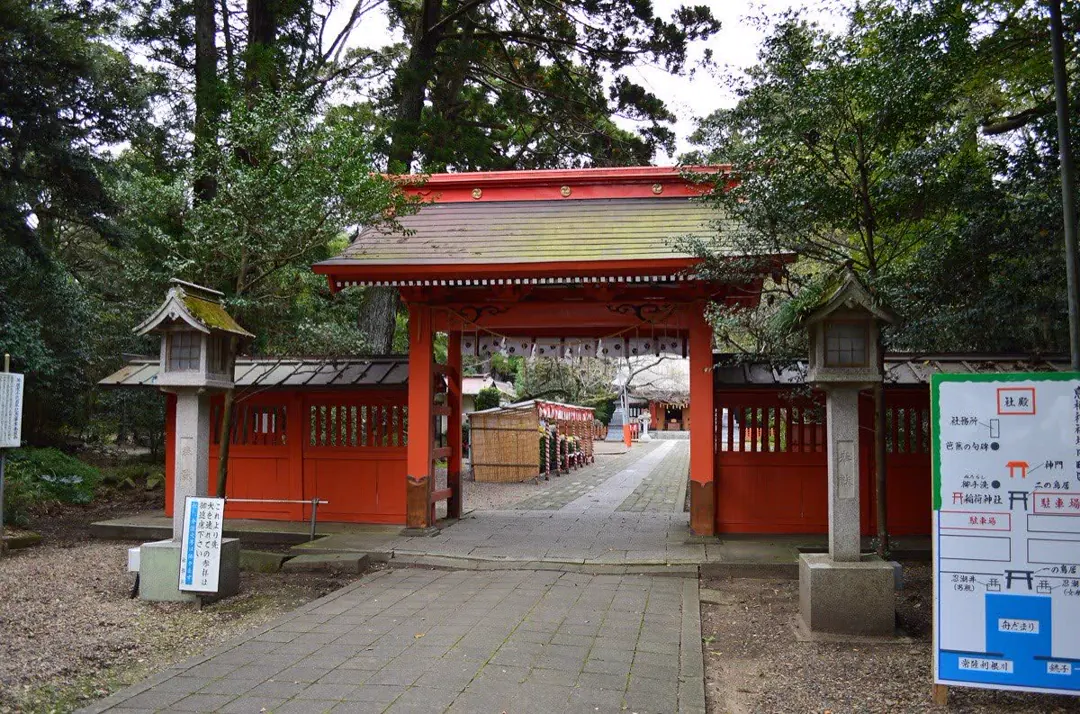 Ibaraki
Ikisu Shrine
The way-opening deity Kunado and the Oshioi wells — one of the Three Shrines of the East.
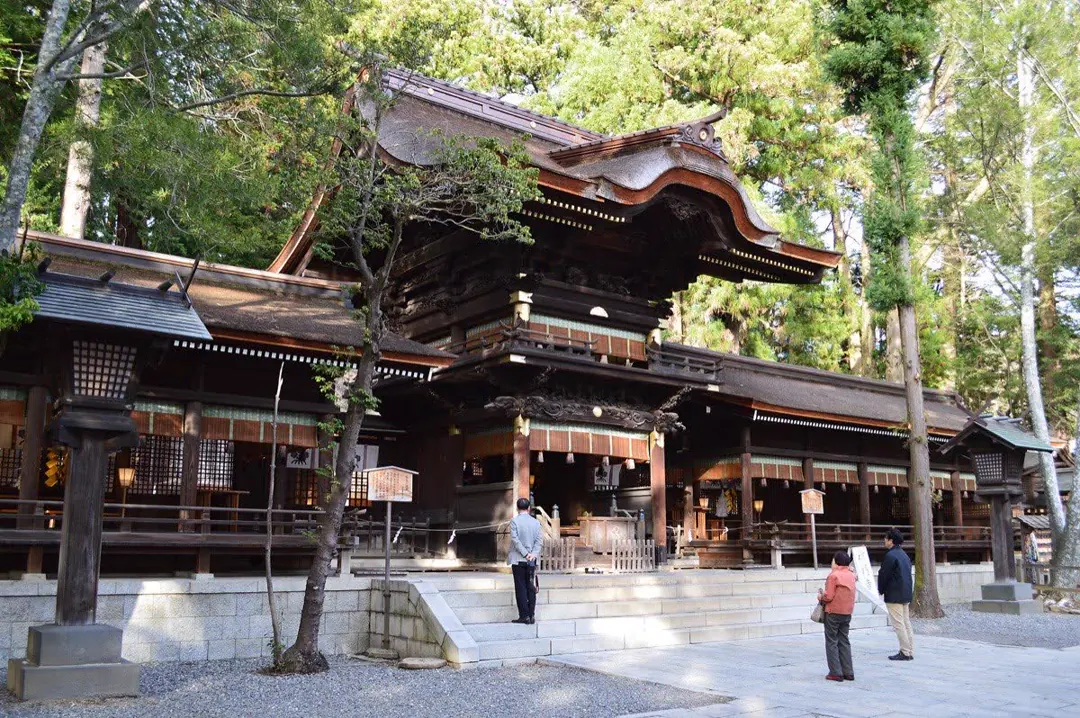 Nagano
Suwa Taisha
Head shrine of all Suwa shrines in Japan, famed for the Onbashira Festival.
 Shimane
Izumo Oyashiro (Izumo Grand Shrine)
The grand shrine of en-musubi, where the myriad gods of Japan gather.